
When a concrete floor settles, it leaves a clear visual footprint on adjacent walls long before the floor itself looks uneven. Whether it’s an unfinished basement, a living space, or an exterior stoop, walls hold the evidence of concrete movement.
Here is how to spot floor settlement on your walls, what causes it, and what to look for in different areas of your home.
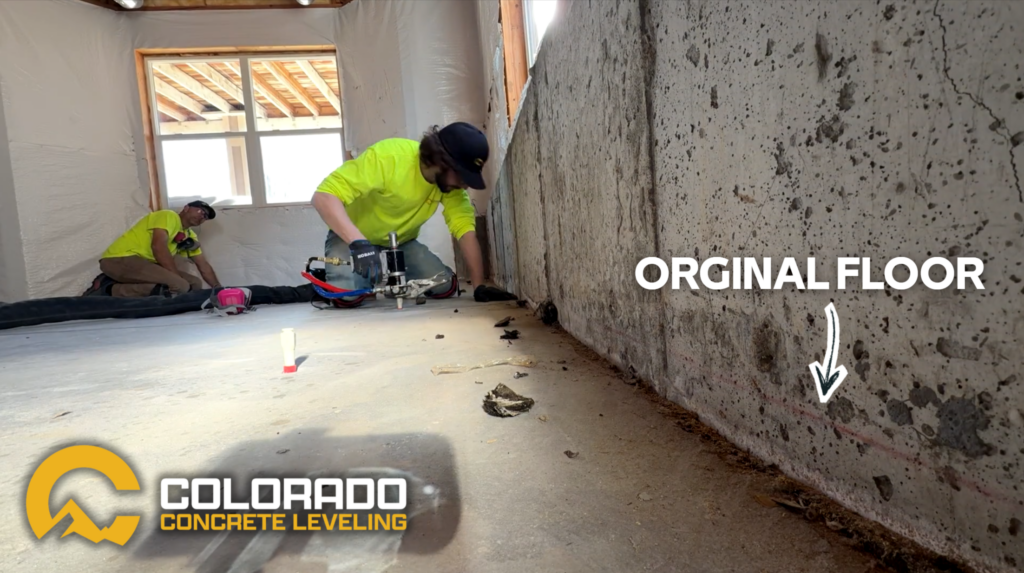
In basements, original snap lines that look inches above the slab are a dead giveaway.
During construction, trade crews snap chalk lines or finish concrete to a specific elevation against basement walls. As subsoil settles and the floating floor drops, it reveals the wall surface that was originally below floor level.
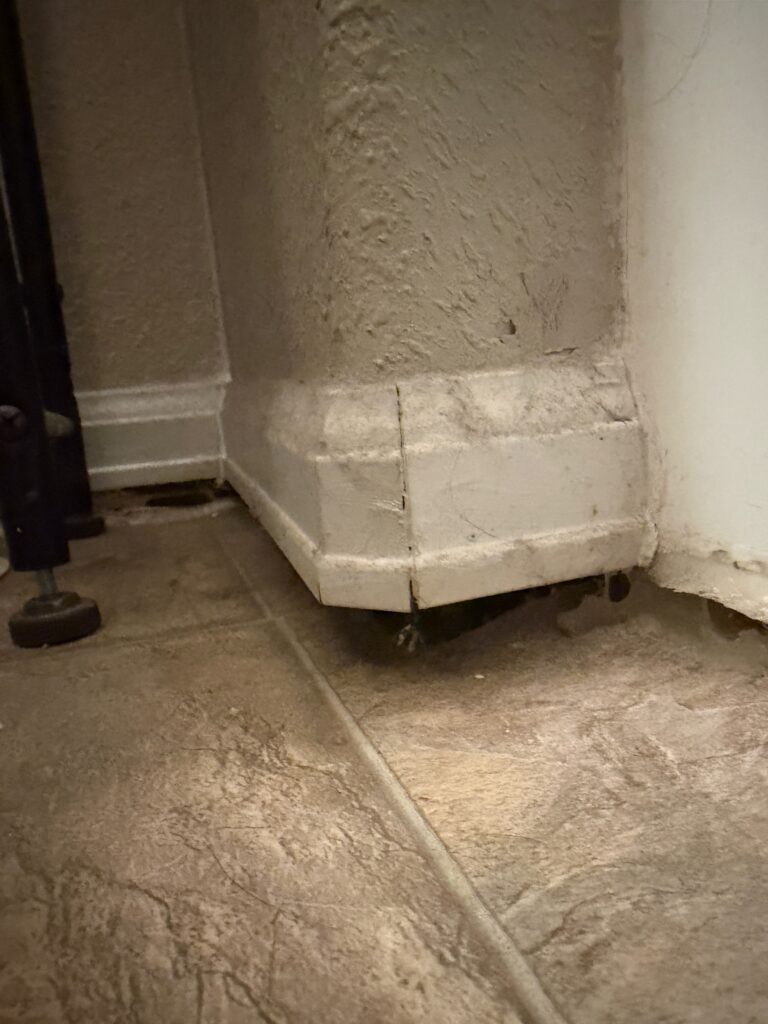
In finished rooms, settling floors drop from the trim leaving floating baseboards.
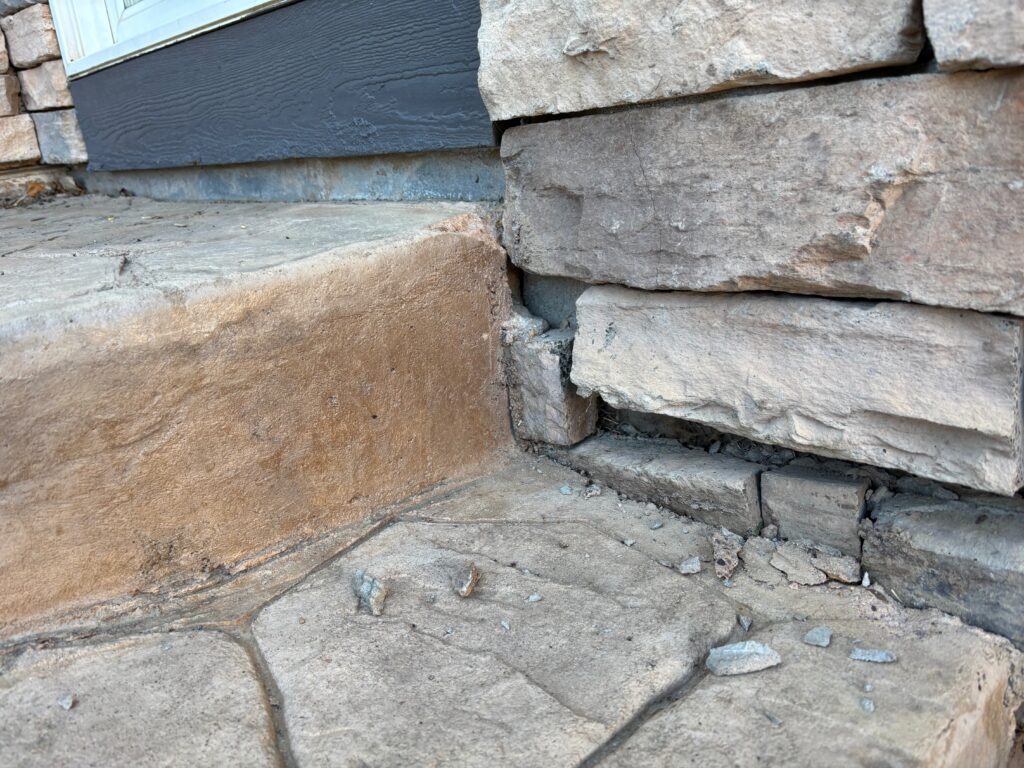
On exteriors, stone veneers will break the mortar and expose the home’s footing.
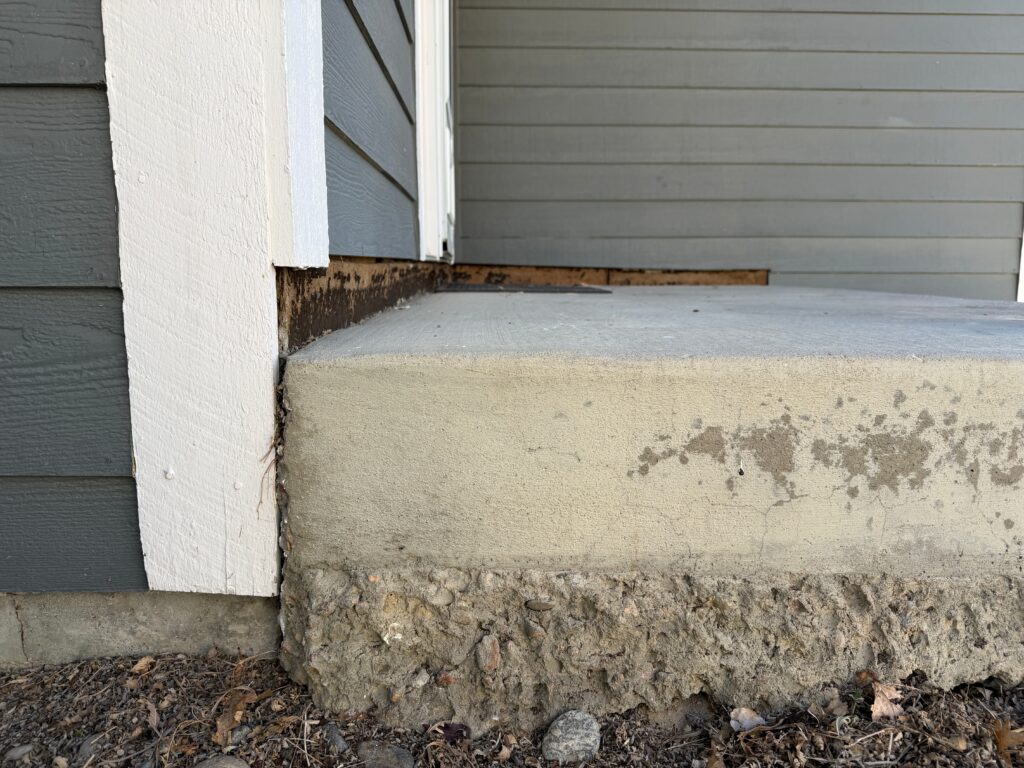
Sinking exterior concrete pads can expose unpainted framing along your siding.
Inside garages, stripped paint and coatings near the ground indicate the concrete is dragging down.
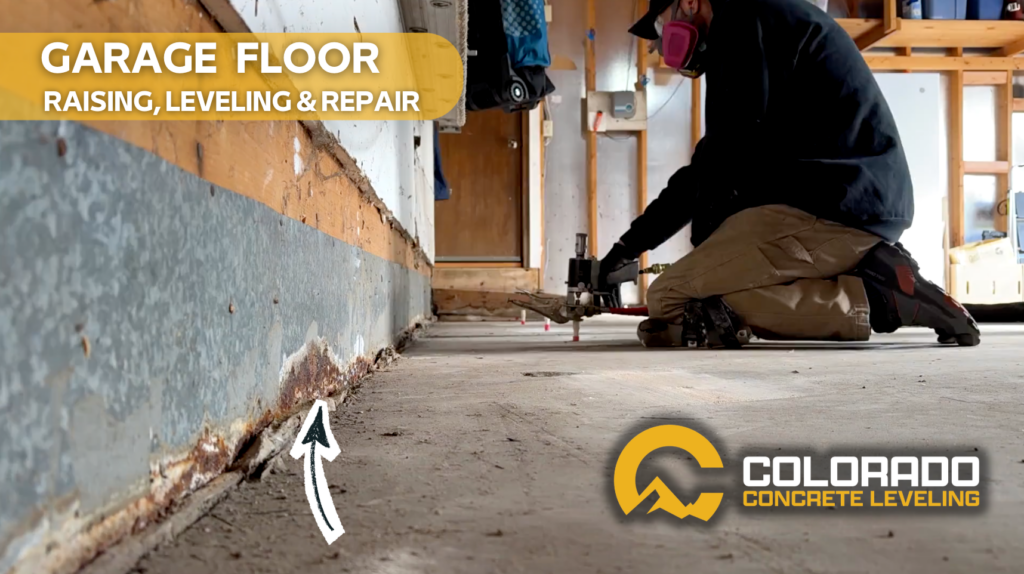
Against concrete walls, horizontal friction scrape marks is a classic sign settlement occurred.
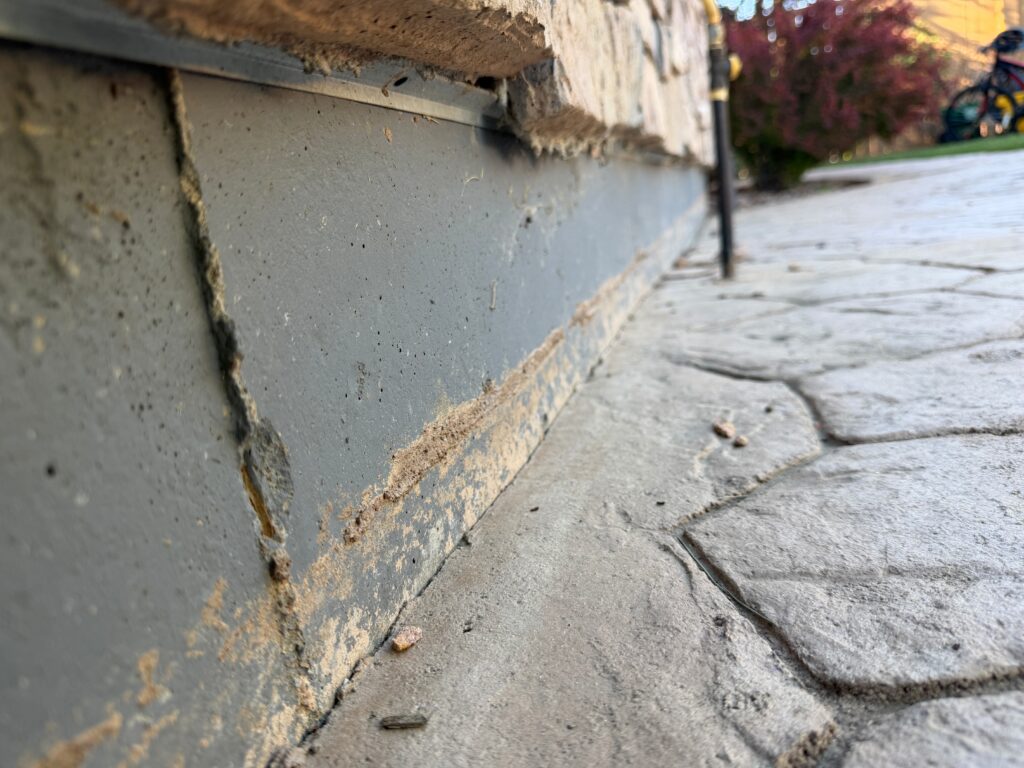
And sometimes, it’s more obvious. Like features that were once connected to both the wall & floor, have since disconnected.
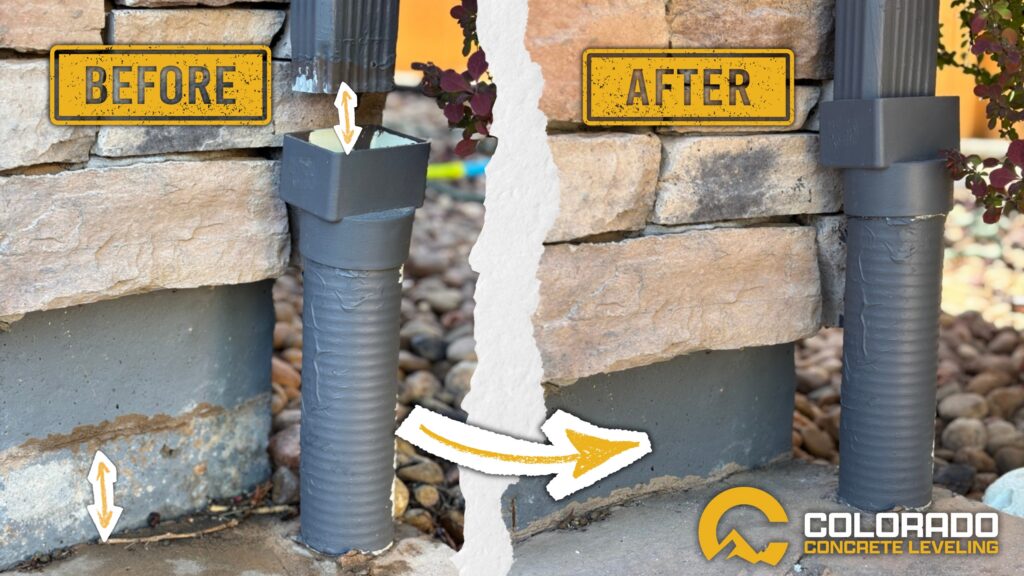
Spotting these wall signs early saves your concrete. Polyurethane foam injection raises your slabs back to baseline—without complete replacement. Contact Colorado Concrete Leveling today.
And sometimes, it’s more obvious. Like features that were once connected to both the wall & floor, have since disconnected.
If you see anything like this, call Colorado’s Highest Rated Locally Owned concrete repair team for a free evaluation.